
We build online stores on both Shopify and WooCommerce, and the honest answer to “which is better?” is that it depends on what you sell and how much of the running you want to do yourself. Here’s how they actually differ, without the affiliate-link enthusiasm.
The one-sentence version
Shopify is a store you rent: hosted, maintained and secured for you, with less control. WooCommerce is a store you run: free software on your own WordPress site, with full control and the upkeep that comes with it.
Cost
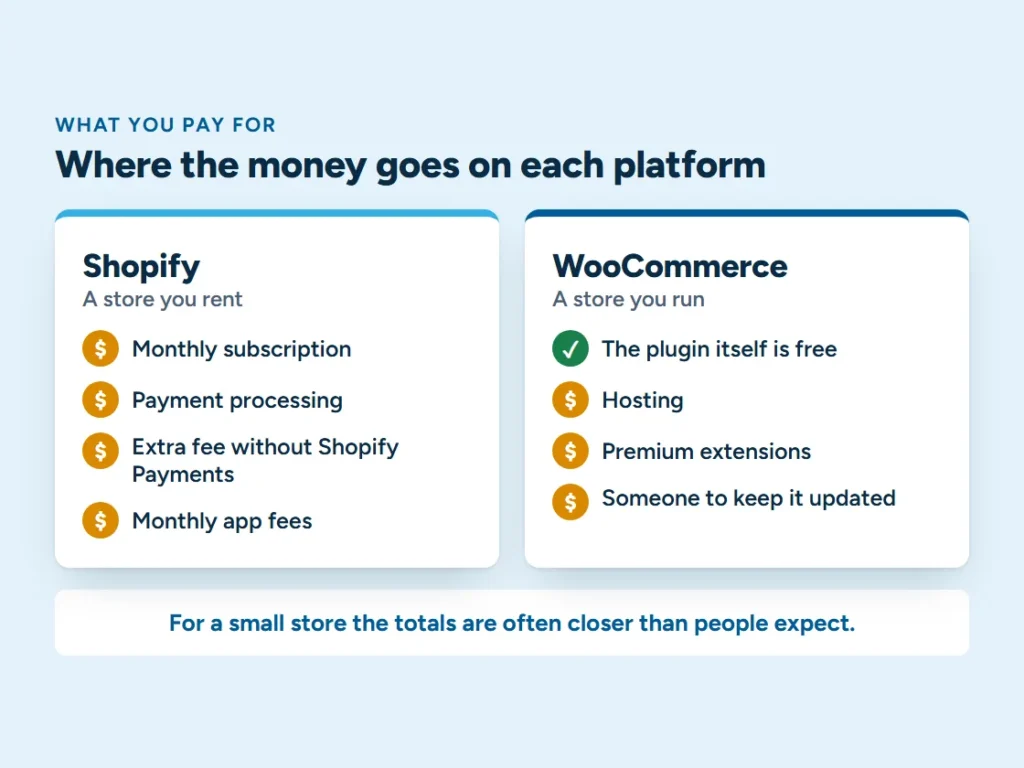
Shopify charges a monthly subscription, plus payment processing, plus an extra transaction fee if you use a payment provider other than Shopify Payments. Apps for features like subscriptions or reviews usually add their own monthly fees, and those add up.
WooCommerce itself is free, but you pay for hosting, any premium extensions, and someone to keep WordPress, WooCommerce and the plugins updated. For a small store the totals often end up closer than people expect. The difference is where the money goes and who does the work.
Upkeep
This is the biggest practical difference. Shopify handles hosting, security and updates. You can’t forget to update it, because there’s nothing to update.
WooCommerce needs regular updates, backups and monitoring like any WordPress site. Skip that and stores break or get hacked. That’s exactly what our managed plans cover, but it has to be someone’s job.
Control and flexibility
WooCommerce wins here. You can change anything, store your data where you like, and build unusual pricing, product options or checkout rules. If content and products need to live together, like a blog that sells, or a service business that also sells a few products, WordPress handles it naturally.
Shopify is more opinionated. Most stores never hit its limits, but checkout customization and some product structures are restricted, and you work within its app ecosystem.
SEO
Both can rank well. WooCommerce on WordPress gives you more control over URLs, structured data and content. Shopify has fixed URL patterns such as /products/ and /collections/, which are fine, just not changeable. What actually decides rankings on either platform is the same: unique product descriptions, sensible categories, fast pages and clean structured data. See our eCommerce SEO page for what that involves.
Speed
A lean Shopify theme is fast out of the box. A WooCommerce store can be just as fast, or very slow, depending on the hosting and how many plugins are piled on. Shopify stores slow down too, usually from apps that each add their own scripts.
Connecting your other systems
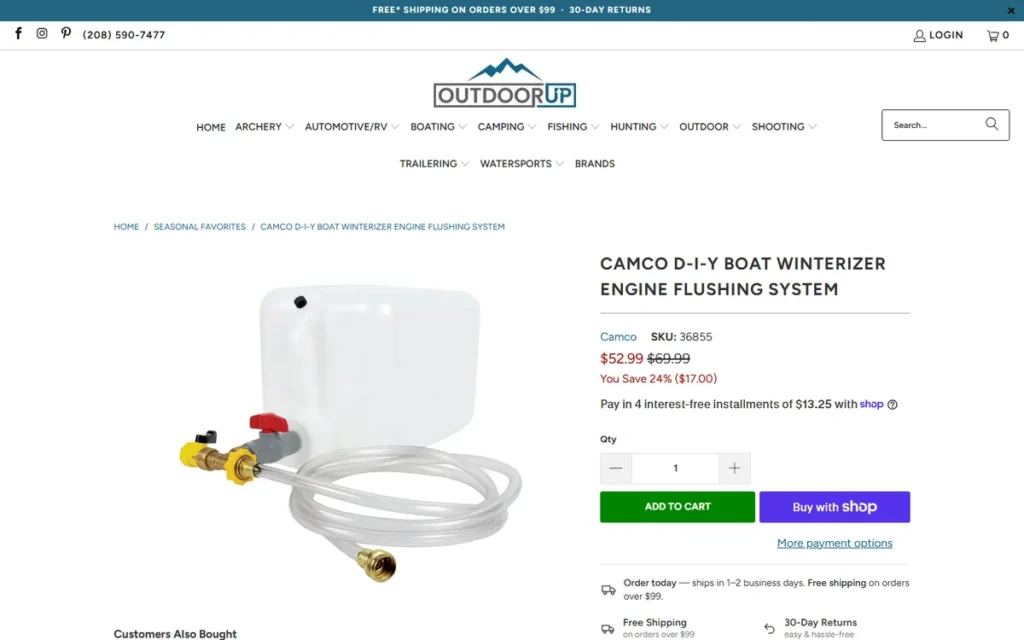
Both connect to accounting, inventory, shipping and CRM tools. Shopify’s app store makes common connections easy; WooCommerce makes uncommon ones possible. For OutdoorUp, a Shopify store for outdoor gear, the work that mattered most was integrating their business systems so orders didn’t need retyping.
How to choose
- Choose Shopify if you want the store to run itself, you sell standard physical products, and you’d rather pay a subscription than manage software.
- Choose WooCommerce if your site is already on WordPress, you need custom pricing or product rules, content matters as much as products, or you want full control of your data and hosting.
- Either works for most small stores. Pick the one whose upkeep you, or whoever helps you, will actually do.
See our eCommerce design service, the Cart Health case study, a store with more than 10,000 products, or tell us about your store and we’ll tell you which we’d pick and why.
Common questions
What’s the main difference between Shopify and WooCommerce?
Shopify is a store you rent: hosted, maintained and secured for you, with less control. WooCommerce is a store you run: free software on your own WordPress site, with full control and the upkeep that comes with it.
Is WooCommerce cheaper than Shopify?
Not always. WooCommerce is free, but you pay for hosting, premium extensions and someone to keep it updated. Shopify charges a monthly subscription plus payment processing and app fees. For a small store the totals are often closer than people expect.
Which is better for SEO, Shopify or WooCommerce?
Both can rank well. WooCommerce gives more control over URLs, structured data and content; Shopify’s URL patterns are fixed but fine. Unique product descriptions, sensible categories, fast pages and clean structured data decide rankings on either.
eCommerce · Carey Enterprises
Planning or fixing an online store?
We build and run Shopify and WooCommerce stores. Bring your product count and what isn’t working, and we’ll tell you what we’d do.