
Custom development Custom software development for North Idaho and Spokane businesses
When spreadsheets and off-the-shelf apps can’t keep up, we build the system that can. For Cart Health, that’s a product information system that manages about 50,000 products and saves the business more than 90% of the time the work used to take.
Featured project
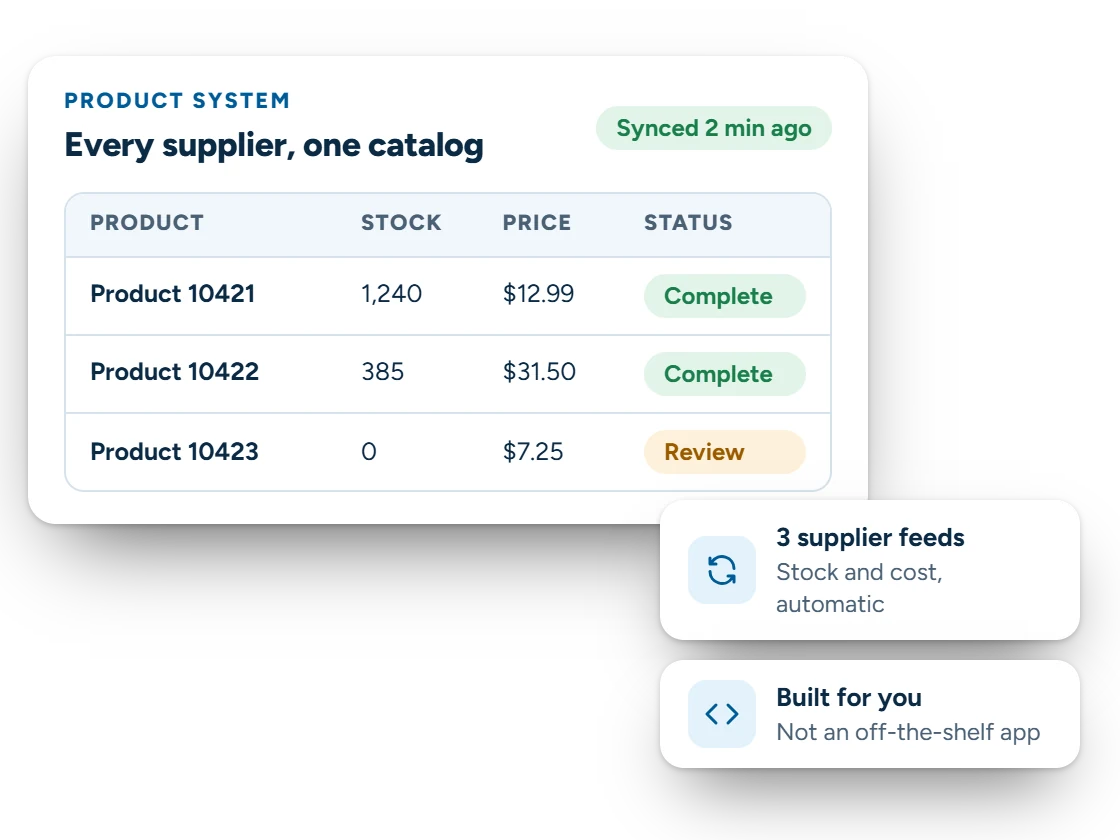
Cart Health’s product information system
Cart Health sells medical supplies online. Its products come from several suppliers, each with its own stock levels, costs and product details, and all of it changes constantly.
What it does
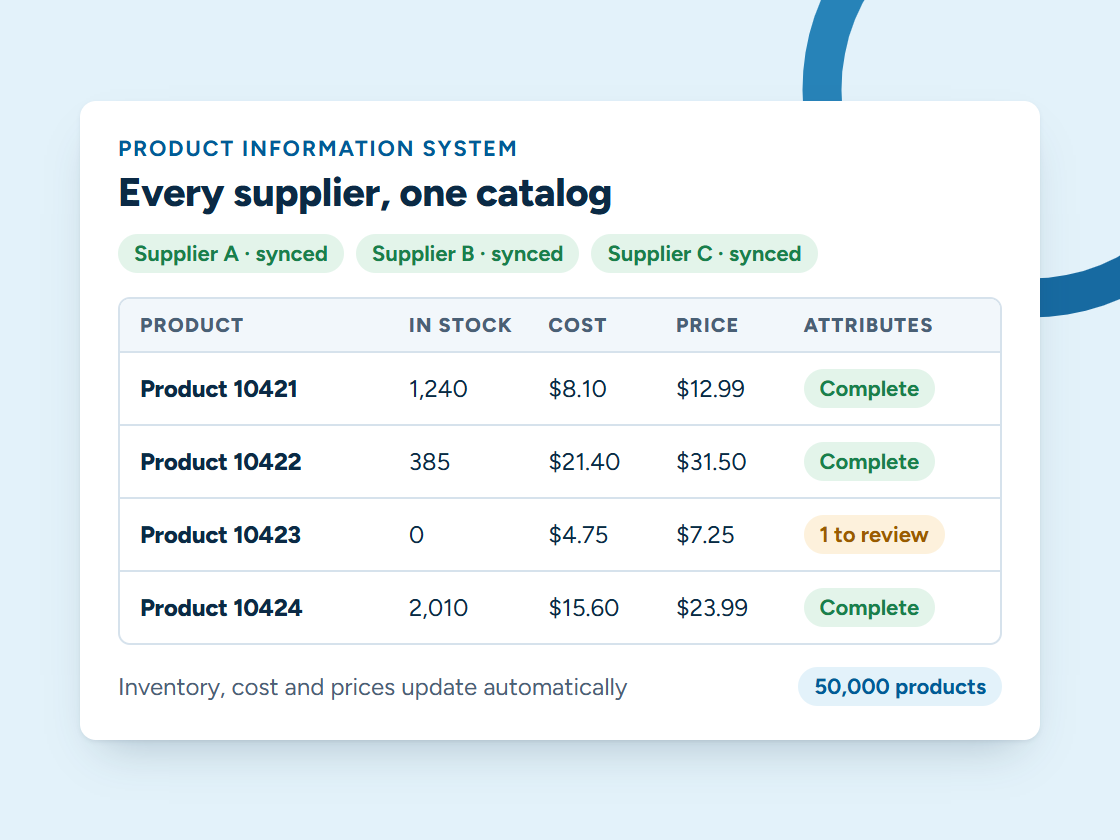
- Brings every supplier into one catalog. Inventory from multiple suppliers is fully integrated, so stock on the store reflects what can actually ship.
- Manages cost and pricing. Supplier costs flow in and prices are managed in one place instead of product by product.
- Keeps product attributes complete. Every product’s details are stored and managed together, so customers can filter, compare and find the right item.
- Runs at scale. About 50,000 products and their attributes, managed in one system.
The result: work that used to fill the team’s week now takes a fraction of it, more than 90% less time. That time goes back into running the business.
Read the full Cart Health case study, including the store we built and support.
What we build
Custom software we take on
Product information systems
One home for every product, its attributes, costs and prices, feeding your store instead of being typed into it.
Supplier and inventory feeds
Stock and cost updates from your suppliers, brought in automatically and checked before they reach your store.
Pricing automation
Prices that follow your rules when costs change, so margins don’t slip while nobody is looking.
Connected systems
Your website, store, CRM and accounting talking to each other, so nobody retypes an order or a lead.
Tools for your team
Dashboards and simple internal apps built around how your business actually works.
Store features off-the-shelf can’t do
Custom product options, pricing rules and catalog structures for stores that have outgrown the standard setup.
How it works
From the first conversation to a system you rely on
Step 1
See how the work happens
We sit with the people doing it today and map every step, spreadsheet and copy-paste.
Step 2
Build the useful core first
The smallest version that removes the most manual work, so it pays off early.
Step 3
Test with real data
Run it alongside the old way until the numbers match and your team trusts it.
Step 4
Run it and keep improving
We support it after launch and add to it as the business grows.
Questions
Custom development questions
Do I need custom software?
If your team spends hours every week copying information between systems, fixing spreadsheets or updating products by hand, and the apps you’ve tried can’t do what you need, probably. If an off-the-shelf tool can do the job, we’ll tell you and help you set it up instead.
Can it work with the systems we already use?
Usually. Most of the work is connecting what you already have, like your store, suppliers and accounting, rather than replacing it. See our system integrations work.
How much does custom development cost?
It depends on what it needs to do, so we price it after a conversation, as part of our Enterprise work. We start with the piece that saves the most time, so you see the payoff early.
What happens after it’s built?
We support it, fix anything that breaks and add features as your business changes, the same way we’ve supported Cart Health since launch.
Keep exploring
Related services
Spending hours on work a system could do?
Tell us what your team does by hand every week. We’ll tell you what we’d automate first and what it would take.